Introduction
Few household surprises are as unwelcome as a stain on a carpet or sofa. A pet has an accident, a drink tips over, muddy paws cross the hallway, or a child drops something on the stairs. These messes tend to appear at inconvenient moments, and ordinary vacuuming does little for them because a stain is not loose debris. It is something that has soaked into fibers.
Portable carpet cleaners, sometimes called spot cleaners, were developed for this kind of problem. Instead of renting a large machine or hiring a professional for a small area, a household can keep a compact unit at home and use it when a mess appears. The basic idea is to apply a cleaning solution to the affected area, loosen the residue, and draw the dirty liquid back out.
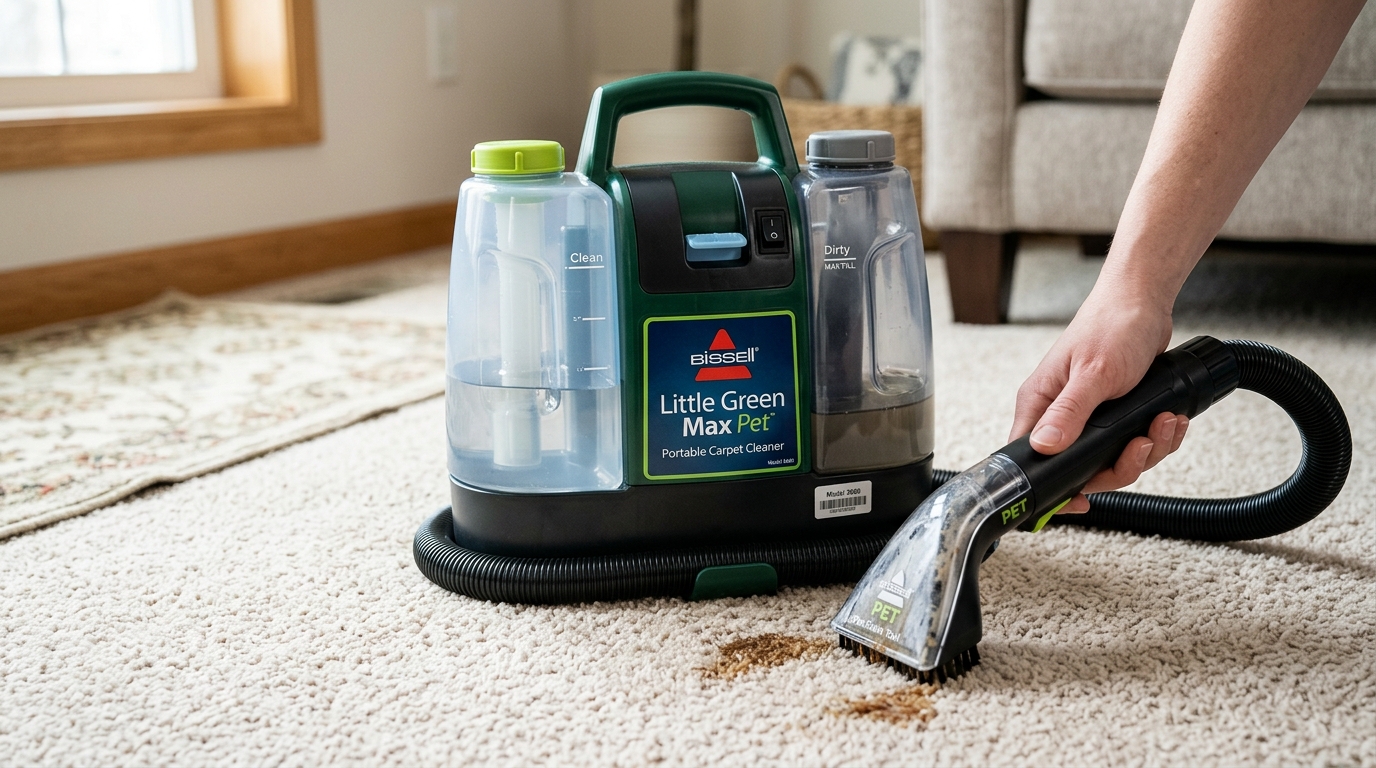
Product names in this category can be hard to interpret, especially when they include words like “Max” and “Pet.” This guide looks at the BISSELL Little Green Max Pet Portable Carpet Cleaner, model 3860, from an informational point of view. It explains what this type of machine is, how its main features are designed to work, which households may find it relevant, and what is worth thinking about before making a decision.
The article is based on general knowledge of the product category and not on hands-on use. It does not promise any particular cleaning result, and readers who need exact specifications, included accessories, or current details should confirm them on the official product listing.
Product Overview
The BISSELL Little Green Max Pet 3860 belongs to the category of portable carpet and upholstery cleaners. These are compact, corded machines designed for small-area cleaning instead of whole-room or whole-house carpet cleaning. A typical unit includes a clean-water tank, a recovery tank for dirty liquid, a flexible hose, and one or more cleaning tools that attach to the end of the hose.
The product name offers a few clues about its intended role:
- Portable: the machine is meant to be carried to the mess instead of being wheeled across a whole room.
- Carpet Cleaner: it is intended for fabric surfaces such as carpet, rugs, and upholstery.
- Pet: it is marketed toward households that deal with animal-related messes.
- Max: a naming choice suggesting a larger or more capable version within the product family, though the specific differences are best confirmed on the official listing.
The general purpose is straightforward. It is meant to help households address stains, spills, and soiled spots on soft surfaces without needing a large, dedicated carpet cleaning machine. It is best understood as a targeted cleaning tool for everyday accidents, not as a replacement for professional deep cleaning of an entire home.
How Portable Cleaners Generally Work
Although designs vary, most portable carpet cleaners follow a similar process:
- Clean water is mixed with a suitable cleaning formula in one tank.
- The machine sprays that solution onto the surface through the cleaning tool.
- A brush or textured tool helps loosen the soil from the fibers.
- Suction pulls the dirty liquid back into a separate recovery tank.
Because the dirty liquid is collected instead of simply left in the carpet, the surface is typically damp afterward and needs time to dry. The overall approach is closer to rinsing and extracting than to scrubbing with a cloth.
Who This Type of Machine May Suit
A portable spot cleaner with a pet focus is often considered by:
- Pet owners who deal with occasional accidents on carpet, rugs, or furniture
- Families with young children and frequent spills
- Renters who want a way to address stains without relying on professional services
- People with stairs, car interiors, or upholstered furniture that are hard to reach with larger machines
- Households that prefer to treat messes quickly, before they have time to set
Whether it fits a particular home depends on the types of surfaces, how often messes happen, and how much storage space is available.
Key Features
Product listings often list features quickly, which can make it hard to see what each one means in practice. The sections below explain the main characteristics associated with this type of machine and the kind of practical value each may offer.
Compact, Portable Format
The defining trait is size. A portable cleaner is meant to be picked up and carried to the location of the mess, whether that is a bedroom corner, a staircase, or the back seat of a car. For people who have used a full-size machine, the difference in effort can be significant, since there is no need to push a heavy body across a room for a single stain.
At the same time, a compact body means smaller tanks, so it is better suited to localized cleaning than to large surfaces. This is a matter of matching the tool to the job.
Pet-Focused Positioning
The word “Pet” indicates that the machine is intended for the kinds of messes animals tend to cause. These can include accidents on carpet, muddy paw prints, shed hair in upholstery, and lingering marks on rugs or stairs. A pet-oriented model is often paired with tools or cleaning formulas that are meant to address these situations.
Readers who want to know exactly which tools and formulas come with the 3860 should check the official listing, since included accessories can change over time. It is also worth remembering that no machine can guarantee the removal of every stain or odor, particularly if the mess has been present for a long time or has soaked deeply into padding.
Spray and Extraction System
Most machines of this type use a spray-and-suction approach. Solution is applied to the surface, and then suction draws the liquid back out. The purpose is to lift dirt that has settled into the fibers and carry it away with the extracted water.
How effective this is depends on many factors, including the type of stain, how long it has been there, the fabric, and the amount of liquid applied. Gentle, repeated passes are generally more helpful than flooding an area with water.
Cleaning Tools and Attachments
Portable cleaners usually come with a hose and at least one handheld tool. Some tools are designed with bristles or textured surfaces to help loosen soil, while others may be shaped for stairs, upholstery, or tight spaces. A longer hose can make it easier to work on stairs or inside a vehicle without repositioning the body of the machine.
Because attachments vary between model versions, the official product page is the most reliable place to see what is included and how each tool is intended to be used.
Separate Clean and Dirty Water Tanks
Keeping fresh solution and recovered liquid in separate tanks is a standard design feature in this category. It helps prevent dirty water from being sprayed back onto the surface. Tank capacity is a practical consideration. A smaller tank means more frequent refilling and emptying, while a larger one may be heavier to carry when full.
Corded Operation
Machines of this kind are generally corded, which supports steady suction and spraying without worrying about a battery. The trade-off is reach. Users may need an extension cord or may need to plan around the location of outlets, especially when cleaning stairs or a vehicle parked outside.
Use on Multiple Soft Surfaces
Portable cleaners are often described as suitable for carpet, area rugs, upholstery, stairs, and car interiors. This is a broad description, and not every fabric responds the same way. Delicate materials, natural fibers, and items with “dry-clean only” labels may not be appropriate. Checking the care label and the manufacturer’s guidance before cleaning is always a sensible step.
Materials and Design
Compact cleaning machines are typically made from molded plastics, with transparent or semi-transparent tanks so the user can see liquid levels. Plastic keeps the machine light enough to carry while holding both clean and dirty water.
Build and Structure
Because this type of machine handles liquid, a few design details are especially relevant. Readers may want to look at how securely the tanks lock into place, how well the lids seal, whether the hose connection feels firm, and whether the handle is comfortable to hold when the tanks are full. These small details often influence daily use more than headline specifications do.
Tank Design
A clear tank allows the user to see when the clean solution is running low and how much dirty water has been collected. A wide opening makes filling and rinsing easier. Smaller openings can be more awkward, especially when emptying thick or debris-filled liquid.
Hose and Tool Storage
Many portable cleaners include some way to store the hose and tools on or near the body of the machine, which helps keep everything together between uses. Storage design may seem like a minor point, but it affects how convenient the machine is to bring out and put away.
Weight and Carrying
Even a compact cleaner becomes heavier once its tank is filled with water and solution. Someone carrying it up a staircase or into a vehicle may notice this. Checking the listed weight and thinking about how it feels when full can help set realistic expectations.
Appearance
Styling on cleaning equipment is usually functional. Bright accents often mark the tanks, controls, and removable parts, which can make them easier to identify. For most people, ease of use will matter more than appearance, though a tidy design may be appreciated if the machine is stored in a visible area.
Performance
Describing performance responsibly means separating what a product is designed to do from what any individual will experience. This article is not based on hands-on testing, so everything below should be read as an explanation of design intent and not as measured results.
What the Machine Is Designed to Do
The BISSELL Little Green Max Pet 3860 is designed to help clean localized areas of carpet, upholstery, stairs, and similar soft surfaces. It applies a cleaning solution, helps loosen soil with a tool, and extracts the dirty liquid. Within the pet category, the goal is to help households address everyday messes associated with animals.
Factors That Influence Real-World Results
Results with any portable cleaner depend heavily on the situation. Some of the main variables include:
- Type of stain: Fresh spills are generally easier to treat than older, set-in marks.
- Fabric or carpet type: Synthetic fibers, natural fibers, and delicate upholstery can respond differently.
- Depth of the mess: Liquids that soak into padding or cushions may be harder to extract fully.
- Cleaning solution: Using a formula intended for the machine and the surface matters.
- Technique: Slow, overlapping passes with moderate liquid usually work better than rushing or oversaturating.
- Drying conditions: Airflow and room temperature influence how quickly the surface dries.
Because of these variables, two households may describe the same model very differently. A stain that fades in one case may remain partly visible in another, which is why it helps to treat product descriptions as indications of intent and not as promises.
Odors and Pet Messes
Pet-related odors can be tricky. Some are on the surface, while others may have soaked into deeper layers such as carpet padding or the subfloor. A portable cleaner is designed to work mostly on the surface and upper fibers. Readers dealing with long-standing or deep odors may need additional steps, and in some cases professional help.
Drying Time and Dampness
After cleaning, the treated area will usually be damp. Drying time varies with the amount of water used, humidity, and ventilation. Good airflow, such as an open window or a fan, may help. It is generally wise to keep pets and children off the area until it has dried fully.
Noise and Handling
Extraction machines produce noise from their motors and suction systems. Loudness varies, and personal sensitivity differs, so people with noise-sensitive animals may want to keep this in mind. Handling depends on the weight of the machine, hose flexibility, and how comfortable the tools are to hold.
Common Uses
A portable carpet cleaner with a pet focus is usually intended for targeted cleaning instead of whole-home maintenance. These are some of the situations where people commonly use this type of machine.
Pet Accidents on Carpet
Accidents on rugs and carpeting are one of the most common reasons people look at this category. Treating the area promptly may help limit how deeply the mess settles, although results vary from case to case.
Muddy Paw Prints and Tracked-In Dirt
Entryways and hallways often collect dirt from shoes and paws. A portable cleaner can be used on these specific zones without cleaning the whole room.
Stairs
Carpeted stairs tend to collect dirt in the same spots, and they are awkward for large machines. A compact unit with a hose and handheld tool may be easier to use on steps.
Upholstered Furniture
Sofas, armchairs, and ottomans sometimes suffer spills or pet-related marks. With a suitable tool and after checking the fabric care label, a portable cleaner may be used on these surfaces.
Pet Beds and Soft Furnishings
Fabric pet beds, cushions, and similar items can collect dirt and odor. Whether they are suitable for machine cleaning depends on the material and the manufacturer’s care instructions.
Car Interiors
Vehicle seats and floor mats are often exposed to spills, mud, and pet hair. A portable machine can be carried to the car and used with the hose and a small tool, provided there is access to power.
Spills and Everyday Accidents
Not every mess involves pets. Coffee, juice, food drops, and similar spills are common, and treating them soon after they happen is generally easier than dealing with them after they dry.
Advantages
Every product has strengths, and it is useful to look at them without exaggeration. These are some possible advantages of this style of machine.
Convenient Size
A portable body is easier to store and carry than a full-size carpet cleaner. For households with limited space, this may be a meaningful benefit.
Fast Response to Messes
Having a machine ready at home may make it easier to treat spills and accidents quickly, which is often when cleaning is most manageable.
Useful Beyond Carpet
The ability to clean upholstery, stairs, and car interiors gives one machine a range of uses that a large floor-focused unit may not offer.
Pet-Oriented Positioning
For households with animals, a design that considers common pet messes may be a practical match for the tasks they face most often.
Separate Tanks
Keeping clean solution apart from recovered dirty liquid helps the machine do its job more cleanly and lets the user see how much has been removed.
Targeted Cleaning
Instead of cleaning an entire room for one stain, the user can focus on a specific area, which may save time and effort.
Things to Consider
A balanced discussion needs to include possible limitations. Suitability depends heavily on personal preferences, household needs, and the kinds of messes involved.
Not Meant for Whole-Home Carpet Cleaning
Small tanks and a small footprint make this type of machine better suited to spots and small areas. Cleaning entire rooms with it may take many refills and a lot of time.
Results Depend on the Stain
Old, set-in, or deeply penetrating stains may be harder to treat. Readers should keep expectations realistic and avoid assuming that any machine can remove every mark.
Drying Time
Surfaces will remain damp for some time after cleaning. In humid conditions or poorly ventilated rooms, this can take longer.
Fabric Compatibility
Not all fabrics are appropriate for water-based cleaning. Checking care labels and testing in a hidden spot first is a widely recommended precaution.
Tank Management
Smaller tanks need frequent refilling and emptying, particularly when treating several areas in one session.
Cord and Outlet Access
A corded machine needs a nearby outlet. For stairs, vehicles, or distant rooms, an extension cord or careful planning may be required.
Maintenance After Use
Tanks, hoses, and tools should be rinsed and dried after use to avoid odors and buildup. This is an additional step that some people may find tedious.
Personal Preferences
Weight, noise, hose length, and tool shape are subjective. What feels comfortable to one person may not to another.
Comparison with Similar Product Categories
Instead of comparing individual brands, it is more useful to look at how portable carpet cleaners differ from other cleaning categories.
Portable Cleaners and Full-Size Carpet Cleaners
Full-size carpet cleaners are designed for entire rooms and typically have larger tanks and wider cleaning paths. They are heavier and take up more storage space. Portable cleaners trade capacity for convenience, making them more suitable for small areas and quick treatment.
Portable Cleaners and Standard Vacuum Cleaners
Vacuum cleaners are designed to remove dry debris such as dust, crumbs, and hair. They are not intended to treat liquid stains or soil that has soaked into fibers. A portable carpet cleaner addresses a different problem, and many households use both types of machine for different purposes.
Portable Cleaners and Steam Cleaners
Steam cleaners use heated vapor for certain cleaning tasks. They work differently from spray-and-extract machines, and suitability varies by surface. Some people prefer one approach over the other depending on the material being cleaned.
Portable Cleaners and Manual Cleaning Methods
Cloths, brushes, and store-bought stain removers are the traditional approach. They require no equipment but may rely heavily on scrubbing, and they do not extract liquid from deeper in the fibers. A machine adds convenience and extraction but also adds cost, storage needs, and maintenance.
Portable Cleaners and Professional Cleaning Services
Professional cleaners use larger equipment and have experience with a variety of stains and fabrics. They may be more suitable for large areas or difficult situations. A home machine, by contrast, allows immediate action and repeated use without scheduling appointments.
Maintenance and Care
Good upkeep helps any cleaning machine work as intended for longer. Always consult the manufacturer’s manual for model-specific instructions, and unplug the machine before performing any maintenance.
Empty and Rinse the Dirty Water Tank
After each use, empty the recovery tank and rinse it with clean water. Leaving dirty water inside can lead to unpleasant odors and buildup.
Rinse the Clean Water Tank
If any solution remains in the clean tank, empty it and rinse it, particularly if the machine will be stored for a while.
Clean the Tools and Nozzles
Hair, fibers, and residue can collect in the cleaning tool. Rinse or wipe it according to the manual, and check that spray openings are clear.
Check the Hose
Look for blockages or trapped debris in the hose. Gently clearing any obstruction can help maintain proper suction and flow.
Allow Parts to Dry
Let removable parts air-dry before reassembling and storing them. Storing a machine with damp components may encourage odors or mildew.
Wipe the Exterior
A slightly damp cloth can be used to clean the outside of the machine. Avoid spraying liquid on electrical parts or the power cord.
Use Suitable Cleaning Formulas
Using products intended for the machine is generally recommended. Unsuitable chemicals may damage internal parts or leave residue on surfaces. The manual and official product page can guide appropriate choices.
Storage
Keep the machine in a dry place away from heat sources. Storing the hose and tools together with the body makes them easier to find when needed.
Frequently Asked Questions
1. What type of machine is the BISSELL Little Green Max Pet 3860?
It is a portable carpet and upholstery cleaner designed for small-area cleaning. It sprays a cleaning solution, helps loosen soil with a tool, and extracts the dirty liquid into a recovery tank.
2. What does the “Pet” in the name mean?
It indicates that the machine is marketed toward households with animals and the kinds of messes they can cause. The specific pet-related tools or formulas included are best confirmed on the official listing.
3. Can it be used to clean an entire room of carpet?
It is intended mainly for spots and small areas. Cleaning a whole room is technically possible but may require many tank refills and a lot of time, so some people prefer a full-size machine for that purpose.
4. Can it be used on upholstery?
Portable cleaners are commonly used on upholstered furniture, but suitability depends on the fabric. Always check the care label and try a small hidden area first.
5. Will it remove every stain?
No machine can guarantee that. Fresh stains are generally easier to address, while older or deeply set marks may remain partly visible after treatment.
6. Can it help with pet odors?
It may help with surface-level odors by removing the residue that causes them. Deeper odors that have soaked into padding or subfloors may need additional steps.
7. How long does carpet take to dry afterward?
Drying time depends on the amount of liquid used, humidity, temperature, and ventilation. Good airflow, such as an open window or fan, may help.
8. Does it need to be plugged in?
Yes, this type of machine is generally corded and requires an outlet during use. An extension cord may be necessary for stairs or vehicles.
9. Can it be used on stairs?
Portable cleaners are often used on carpeted stairs because the body can sit on a landing while the user works with the hose and tool. The convenience depends on hose length and the attachments included.
10. Can it be used in a car?
Many people use this type of machine on vehicle seats and floor mats, provided they can reach a power source. Always check the fabric type before cleaning.
11. How should the machine be cleaned after use?
Empty and rinse both tanks, clean the tools, check the hose for blockages, and let all parts dry before storing. The manual provides model-specific instructions.
12. What should I consider before choosing a portable carpet cleaner?
Think about the types of surfaces you want to clean, how often messes occur, available storage space, cord reach, and how much weight you are comfortable carrying. Reviewing the manufacturer’s specifications can help clarify whether the machine suits your needs.
Final Thoughts
The BISSELL Little Green Max Pet Portable Carpet Cleaner 3860 represents a practical category of home cleaning equipment: a compact, corded machine intended to help households deal with spills, stains, and pet-related messes on carpet, upholstery, stairs, and similar surfaces. Its portable format and pet-oriented positioning are designed to make quick, targeted cleaning more approachable.
As with any appliance, it involves trade-offs. A small body is easy to store and carry but limits tank capacity. A machine that can address many surfaces still depends on fabric type, stain age, and technique. And while a portable cleaner may reduce the effort of tackling accidents, it also introduces maintenance tasks such as rinsing tanks and drying parts.
The most useful way to approach a decision is to begin with your own household. Think about the surfaces you most often need to clean, how frequently accidents occur, how much storage space you have, and how comfortable you are with the upkeep involved. A machine that matches those needs is more likely to feel worthwhile than one chosen for a single appealing feature.