Introduction
Anyone who has lived with a pet, a toddler, or a favorite armchair knows how quickly a small accident can turn into a lasting mark. A tipped mug, a muddy paw print, or a forgotten spot on the stairs can sit in the fibers and become harder to deal with the longer it stays. Ordinary vacuuming helps with loose debris, but it was never meant to handle liquid messes or soil pressed into fabric.
That gap is what portable carpet cleaners are meant to fill. These compact machines let a household treat a single spot without renting a bulky unit or booking a professional visit. The basic idea is easy to follow: apply a cleaning solution, loosen the soil, and pull the dirty liquid back out of the fabric.
Because product names in this category often pack in several labels at once, it can be hard to tell what each one means. This guide looks at the BISSELL Little Green Pet Deluxe Portable Carpet Cleaner, model 3353, from an informational perspective. It explains what the machine is, how its main features are designed to work, which households may find it relevant, and what is worth weighing before a decision.
The article draws on general knowledge of the product category and not on hands-on use. It does not promise specific results, and readers who want exact specifications, included tools, or current details should check the official product listing.
Product Overview
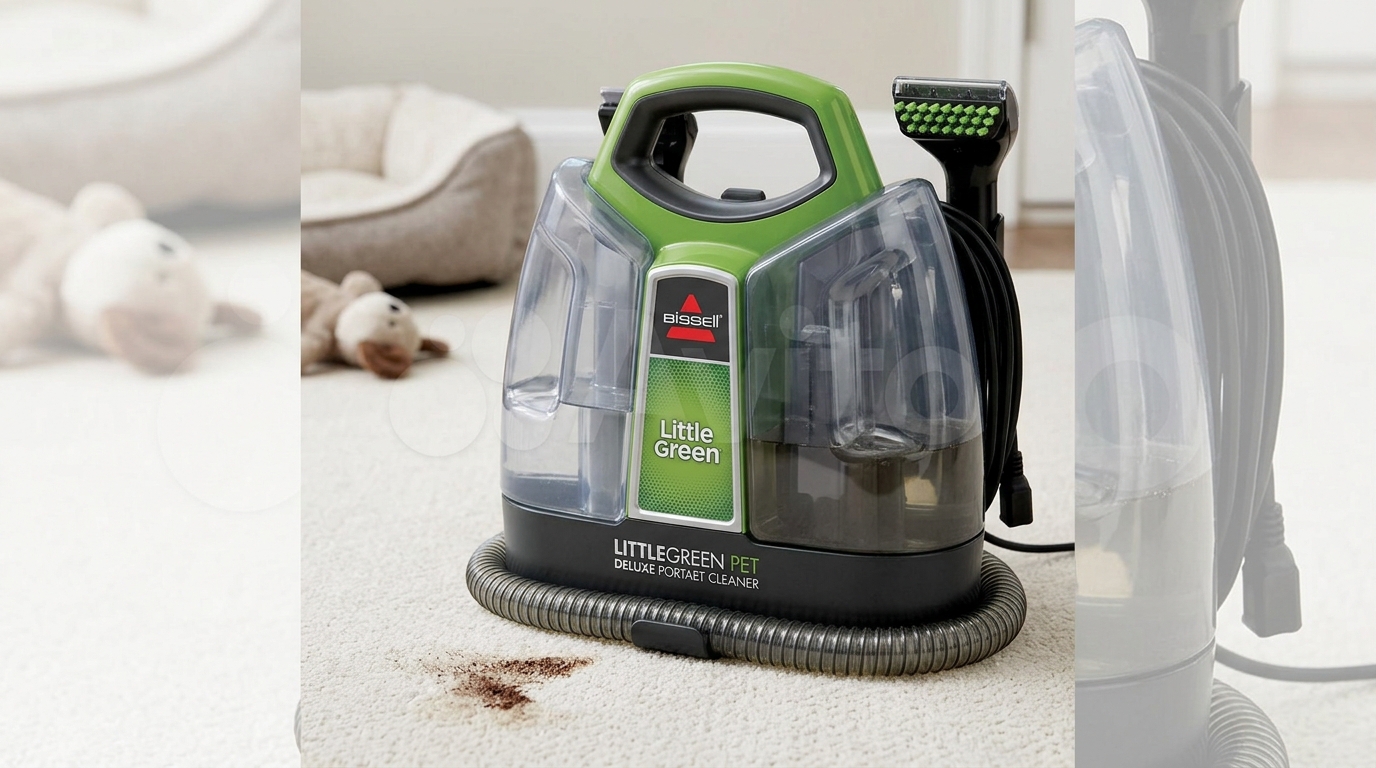
The BISSELL Little Green Pet Deluxe 3353 is a portable carpet and upholstery cleaner. Machines in this group are small, corded units built for spot and small-area cleaning instead of whole-room work. A typical setup includes a tank for clean water and solution, a second tank that collects dirty liquid, a flexible hose, and a handheld tool attached to the end of that hose.
The name gives a few hints about its role:
- Little Green: the product family name, associated with compact spot-cleaning machines.
- Pet: a signal that the machine is aimed at households dealing with animal-related messes.
- Deluxe: a label that usually suggests a more fully equipped version, though the exact differences, such as included tools, are best confirmed on the official listing.
- Portable: the machine is meant to be carried to the mess.
In plain terms, the purpose of this product is to help with localized cleaning on carpet, rugs, stairs, upholstery, and similar soft surfaces. It is best understood as a targeted tool for everyday accidents, not as a substitute for professional deep cleaning of an entire home.
The Basic Process
Designs vary, but most portable cleaners follow a similar sequence:
- Clean water and a suitable cleaning formula are placed in the solution tank.
- The machine sprays the solution onto the surface through the tool.
- A brush or textured surface helps loosen soil from the fibers.
- Suction draws the dirty liquid into a separate recovery tank.
Since liquid is applied and then extracted, the treated area is usually damp afterward and needs time to dry. The approach resembles rinsing and extracting more than scrubbing with a cloth.
Who This Type of Machine May Suit
A portable pet-oriented cleaner is often considered by:
- Dog and cat owners who deal with occasional accidents on rugs and carpet
- Parents of young children who face frequent spills
- Renters who want to address stains without scheduling a service
- People with carpeted stairs, upholstered furniture, or car seats that are awkward for large machines
- Households that prefer to act on messes quickly rather than let them set
Whether it fits depends on the surfaces involved, how often messes happen, and how much storage space is available.
Key Features
Feature lists are easier to understand once they are translated into everyday terms. The sections below describe the main characteristics associated with this type of machine and the practical value each may offer.
Compact and Carry-Friendly Body
The most noticeable trait is size. A small body is designed to be lifted and brought to the location of the mess, whether that is a corner of a bedroom, a flight of stairs, or the back seat of a car. For people who have handled larger carpet cleaners, the reduction in effort can be considerable.
The compromise is capacity. Smaller tanks suit spot cleaning well but are not ideal for large surfaces, so the machine works best when matched to the right kind of job.
Pet-Focused Positioning
The word “Pet” points to the sort of messes the machine is meant to address: accidents on carpet, paw prints, and marks on rugs or stairs. Models in this style are often paired with tools or cleaning formulas intended for these situations.
Included accessories can change over time, so the official listing is the best place to confirm what comes with the 3353. It is also realistic to remember that no machine can promise to remove every stain or odor, especially when a mess has been there for a long time or has soaked into padding.
Spray and Extraction Action
Portable cleaners generally combine spraying with suction. The solution is applied to the surface, and the machine then pulls the liquid back out, carrying loosened dirt with it. The aim is to lift soil that has settled into the fibers.
Effectiveness depends on the stain, the fabric, how long the mess has been there, and how much liquid is used. Slow, moderate passes tend to be more helpful than soaking an area.
Handheld Cleaning Tool
The tool at the end of the hose is where the work happens. Many are fitted with bristles or textured edges to help agitate fibers while the solution is applied and extracted. The shape and size of the tool influence how easily it reaches into corners, along stair edges, or across the seat of a chair.
Hose Reach
A flexible hose lets the user work on stairs, furniture, or vehicle interiors without moving the main body repeatedly. Length and flexibility vary by design, so anyone who plans to clean stairs or a car may want to check the stated hose length.
Separate Clean and Dirty Tanks
Using two tanks, one for fresh solution and one for recovered liquid, is a standard design in this category. It helps keep dirty water from being sprayed back onto the surface, and it lets the user see how much has been collected. Tank size affects how often refilling and emptying are needed.
Corded Operation
These machines are typically corded, which supports steady spraying and suction without battery concerns. The drawback is reach. An extension cord or careful planning may be required when working on stairs or in a vehicle.
Use on Several Soft Surfaces
Descriptions often mention carpet, rugs, upholstery, stairs, and car interiors. Not every fabric tolerates water-based cleaning, so delicate materials, natural fibers, and items labeled for dry cleaning only may not be suitable. Checking the care label and the manufacturer’s guidance is a sensible first step.
Materials and Design
Compact extraction machines are usually made from molded plastic, with transparent or semi-transparent tanks so the liquid level is easy to see. Plastic keeps the body light enough to carry, even with water inside.
Build and Structure
Because this equipment handles liquid, certain details matter more than usual. It may help to look at how securely the tanks lock in, how well the lids seal, how firmly the hose connects, and how comfortable the handle feels when the tanks are full. These small points often influence daily use more than a specification sheet does.
Tank Design
A clear tank makes it easier to see when solution is running low. A wide opening simplifies filling and rinsing, while a narrow one can be awkward, particularly when emptying liquid that contains hair or debris.
Tool and Hose Storage
Many portable cleaners include a spot on the body for storing the hose and tool. It may seem minor, but it affects how convenient the machine is to bring out and put away, and it keeps accessories from getting lost.
Weight When Filled
Even a small machine becomes noticeably heavier once the tank is full. Carrying it up stairs or out to a car may feel different from lifting it empty, so it is worth checking the listed weight and thinking about how it would feel in use.
Appearance
Styling is generally functional, with colored accents marking tanks and removable parts. Most people will care more about ease of use than looks, though a tidy design can be appreciated if the machine is kept in a visible spot.
Performance
Responsible discussion of performance separates what a product is designed to do from what any individual user will experience. This article is not based on hands-on testing, so the following should be read as an explanation of design intent and not as measured results.
What the Machine Is Designed to Do
The BISSELL Little Green Pet Deluxe 3353 is designed to help clean localized areas of carpet, upholstery, stairs, and similar soft surfaces. It applies a cleaning solution, helps loosen soil with a tool, and extracts the dirty liquid. Within the pet category, the goal is to help households handle everyday messes associated with animals.
Factors That Influence Real-World Results
Outcomes with any portable cleaner depend heavily on circumstances. Some of the main variables include:
- Stain type and age: Fresh spills are generally easier to treat than old, set-in marks.
- Fabric type: Synthetic fibers, natural fibers, and delicate upholstery react differently.
- Depth of the mess: Liquids that reach padding or cushion foam can be harder to extract fully.
- Cleaning formula: Using a product intended for the machine and the surface matters.
- Technique: Slow, overlapping passes with moderate liquid usually work better than rushing or oversaturating.
- Drying conditions: Airflow, humidity, and temperature affect how quickly the area dries.
Because of these factors, two households can describe the same model quite differently. A stain that fades in one home may stay partly visible in another, so product descriptions are best read as statements of intent and not promises.
Odors and Pet Messes
Pet odors can be more complicated than they appear. Some sit on the surface, while others sink into carpet padding or the subfloor. A portable cleaner is designed mainly for the surface and upper fibers, so long-standing or deep odors may call for extra steps or professional help.
Drying Time
Treated areas stay damp for a while. Drying time depends on the amount of water used, the humidity, and ventilation. Opening a window or running a fan may help, and it is generally wise to keep children and pets away until the area is fully dry.
Noise and Handling
Extraction machines make noise through the motor and suction system. Loudness differs between designs, and animals can be sensitive to it. Handling depends on weight, hose flexibility, and how comfortable the tool is to hold.
Common Uses
A portable pet-oriented carpet cleaner is generally intended for targeted jobs rather than whole-home upkeep. These are some of the situations where people commonly use this kind of machine.
Pet Accidents on Carpet and Rugs
This is one of the most frequent reasons people consider the category. Treating an accident promptly may limit how deeply it settles, though results vary from case to case.
Tracked-In Mud and Dirt
Entryways and hallways collect dirt from shoes and paws. A portable cleaner can focus on those specific zones without requiring the whole room to be cleaned.
Carpeted Stairs
Stairs are awkward for large machines because of their shape. A compact unit with a hose and handheld tool is often easier to manage on steps.
Upholstered Furniture
Sofas, armchairs, and ottomans can pick up spills or pet-related marks. After checking the fabric care label, a portable cleaner may be used with a suitable tool.
Pet Beds and Soft Furnishings
Fabric pet beds and cushions can hold dirt and odor. Whether machine cleaning is appropriate depends on the material and the maker’s care instructions.
Car Interiors
Vehicle seats and floor mats are exposed to spills, mud, and hair. A portable machine can be carried out to the car, provided there is access to power.
Everyday Spills
Not every mess involves a pet. Coffee, juice, and food drops are common, and treating them soon after they happen is usually easier than waiting until they dry.
Advantages
Every product has strengths, and it helps to look at them without exaggeration. These are some possible advantages of this style of machine.
Easy to Store and Carry
A portable body takes less room than a full-size cleaner, which may matter in apartments and smaller homes.
Quick Response
Having a machine on hand may make it simpler to treat a spill or accident early, when cleanup is often more manageable.
Range of Surfaces
The ability to work on carpet, upholstery, stairs, and car interiors gives one machine a variety of uses.
Pet-Oriented Design Focus
For households with animals, a machine built around common pet messes may match the tasks they face most often.
Separate Tanks
Keeping fresh solution apart from recovered liquid helps the machine work more cleanly and shows how much dirt has been removed.
Focused Cleaning
Instead of treating an entire room for a single stain, the user can concentrate on one area, which may save time and effort.
Things to Consider
A balanced discussion has to include possible limitations. Suitability depends on personal preferences, household needs, and the kinds of messes involved.
Not Intended for Whole-Room Cleaning
Small tanks and a compact footprint make this style of machine better for spots and small areas. Using it on an entire room may require many refills and a lot of time.
Results Depend on the Stain
Old or deeply set stains may be harder to treat. Keeping expectations realistic is wise, since no machine can remove every mark.
Drying Time
Surfaces stay damp after cleaning. In humid or poorly ventilated rooms, drying may take longer.
Fabric Compatibility
Not all fabrics are appropriate for water-based cleaning. Checking care labels and testing a hidden spot first is a widely recommended precaution.
Tank Management
Smaller tanks need frequent refilling and emptying, particularly when several areas are treated in one session.
Cord and Outlet Access
A corded machine needs a nearby outlet. For stairs, vehicles, or distant rooms, an extension cord or some planning may be needed.
Cleanup After Use
Tanks, hoses, and tools should be rinsed and dried after each session to prevent odors and buildup. Some people may find this extra step tedious.
Personal Preferences
Weight, noise, hose length, and tool shape are subjective. What feels comfortable to one person may not to another.
Comparison with Similar Product Categories
Instead of comparing individual brands, it is more useful to see how portable carpet cleaners differ from other cleaning categories.
Versus Full-Size Carpet Cleaners
Full-size machines are designed for entire rooms and typically have larger tanks and wider cleaning paths. They are heavier and need more storage space. Portable cleaners trade capacity for convenience and suit small areas and quick treatment.
Versus Standard Vacuum Cleaners
Vacuums remove dry debris such as dust, crumbs, and hair. They are not designed to treat liquid stains or soil that has soaked into fibers. A portable carpet cleaner addresses a different problem, and many households use both.
Versus Steam Cleaners
Steam cleaners rely on heated vapor for certain tasks and work differently from spray-and-extract machines. Suitability depends on the surface, and some people prefer one approach over the other.
Versus Manual Cleaning
Cloths, brushes, and store-bought stain removers are the traditional approach. They need no equipment but depend heavily on scrubbing and do not extract liquid from deeper in the fibers. A machine adds convenience and extraction but also adds cost, storage needs, and upkeep.
Versus Professional Services
Professionals bring larger equipment and experience with different stains and fabrics, which may suit big areas or difficult situations. A home machine allows immediate action without scheduling.
Maintenance and Care
Good upkeep helps any cleaning machine work as intended for longer. Always consult the manufacturer’s manual for model-specific guidance, and unplug the machine before maintenance.
Empty and Rinse the Recovery Tank
After each use, empty the dirty-water tank and rinse it with clean water. Leftover liquid can cause odors and buildup.
Rinse the Solution Tank
If any solution remains, empty and rinse the tank, particularly when the machine will be stored for a while.
Clean the Tool and Nozzle
Hair, fibers, and residue can collect in the tool. Rinse or wipe it as the manual suggests, and make sure spray openings are clear.
Check the Hose
Look for blockages or trapped debris. Clearing an obstruction gently can help maintain suction and flow.
Let Parts Dry
Allow removable parts to air-dry before reassembling and storing them. Damp components can encourage odors or mildew.
Wipe the Exterior
A slightly damp cloth is enough to clean the outside. Keep liquid away from electrical parts and the cord.
Use Suitable Formulas
Products intended for the machine are generally recommended. Unsuitable chemicals may damage internal parts or leave residue on surfaces.
Storage
Keep the machine in a dry place away from heat. Storing the hose and tool with the body makes them easier to find later.
Frequently Asked Questions
1. What type of machine is the BISSELL Little Green Pet Deluxe 3353?
It is a portable carpet and upholstery cleaner for small-area cleaning. It sprays a cleaning solution, helps loosen soil with a tool, and extracts the dirty liquid into a recovery tank.
2. What does “Deluxe” mean in the name?
It usually suggests a more fully equipped version within a product line. The exact differences, such as included tools or accessories, are best confirmed on the official listing.
3. Can it clean an entire room of carpet?
It is intended mainly for spots and small areas. Cleaning a whole room is possible but may involve many refills and considerable time, so some people prefer a full-size machine for that job.
4. Can it be used on upholstery?
Portable cleaners are commonly used on upholstered furniture, but suitability depends on the fabric. Check the care label and try a hidden area first.
5. Will it remove every stain?
No machine can guarantee that. Fresh stains are generally easier to address, while older or deeply set marks may remain partly visible.
6. Can it help with pet odors?
It may help with surface-level odors by removing the residue that causes them. Deeper odors that have soaked into padding or subfloors may need additional steps.
7. How long does carpet take to dry?
Drying time depends on how much liquid was used, the humidity, the temperature, and ventilation. An open window or fan may help.
8. Does it need to be plugged in?
Yes, this type of machine is generally corded and needs an outlet during use. An extension cord may be useful for stairs or vehicles.
9. Can it be used on stairs?
Portable cleaners are often used on carpeted stairs because the body can rest on a landing while the user works with the hose and tool. Convenience depends on hose length and the attachments included.
10. Can it be used in a car?
Many people use this type of machine on car seats and floor mats if they can reach a power source. Always check the fabric type first.
11. How should it be cleaned after use?
Empty and rinse both tanks, clean the tool, check the hose for blockages, and let everything dry before storing. The manual has model-specific instructions.
12. What should I consider before choosing a portable carpet cleaner?
Think about the surfaces you want to clean, how often messes occur, available storage, cord reach, and how much weight you are comfortable carrying. Reviewing the manufacturer’s specifications can help clarify whether the machine suits your needs.
Final Thoughts
The BISSELL Little Green Pet Deluxe 3353 represents a practical category of home cleaning equipment: a compact, corded machine meant to help households handle spills, stains, and pet-related messes on carpet, upholstery, stairs, and similar surfaces. Its portable format and pet-oriented focus are designed to make quick, targeted cleaning feel more approachable.
As with any appliance, it involves trade-offs. A small body is easy to carry and store but limits tank capacity. A machine that works on several surfaces still depends on the fabric, the age of the stain, and technique. And while a portable cleaner may reduce the effort of dealing with accidents, it also brings maintenance tasks such as rinsing tanks and drying parts.
A sensible way to decide is to start with your own household. Think about which surfaces you clean most often, how frequently accidents happen, how much storage space you have, and how comfortable you are with the upkeep. A machine that fits those needs is more likely to feel worthwhile than one chosen for a single appealing feature.